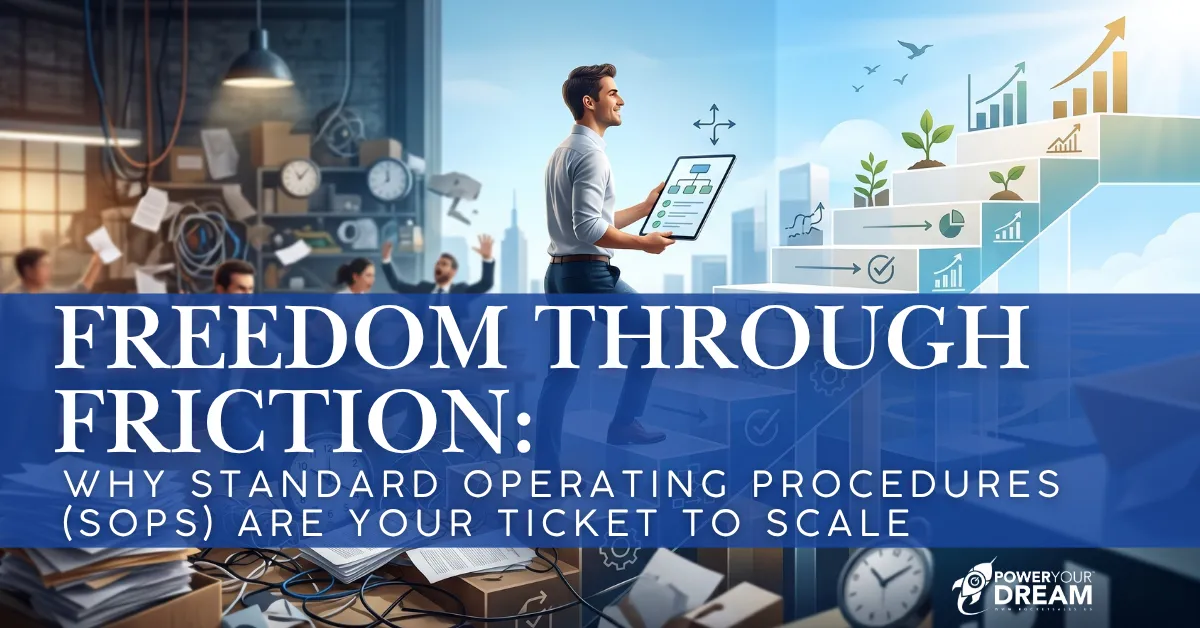
Freedom Through Friction: Why Standard Operating Procedures (SOPs) Are Your Ticket to Scale
Many entrepreneurs resist documenting their processes because they fear it will destroy creativity and turn their company into a rigid, bureaucratic nightmare. They look at Standard Operating Procedures (SOPs) as "friction."
The truth? SOPs don't restrict freedom; they create it.
If your business cannot run for two weeks without you answering calls, putting out fires, or making daily executive decisions, you don't own a business—you own a demanding, stressful job. Here is how to build a self-sustaining operational engine.
The Cost of the "Chaos Tax"
When you lack clear policies and procedures, your business pays a hidden daily levy called the Chaos Tax. It manifests as:
Inconsistent customer experiences (Client A gets great service, Client B gets ghosted).
Burnout from senior team members who constantly have to answer basic questions.
Mistakes that require free re-work, eating directly into your profit margins.
The 3-Step SOP Creation Blueprint
You don't need to lock yourself in a cabin for a month to write a 300-page manual. Build your operational playbook dynamically using this framework:
Step 1: Capture (The "Doer" Documents)
The person currently doing the task should be the one documenting it. Have them use a screen-recording tool (like Loom) to record themselves performing the task while explaining their thought process out loud.
Step 2: Condense (The 3-Part Template)
Turn that recording into a simple, scannable document. Every effective SOP needs exactly three things:
The Objective: Why does this task matter, and what does success look like?
The Steps: A numbered, chronological list of actions (keep it under 10 steps if possible).
The Troubleshooting Guide: What should they do if something goes wrong? Who do they escalate it to?
Step 3: Centralize (The Single Source of Truth)
Store your SOPs in an accessible, searchable digital hub (such as Notion, Trainual, or Google Drive). If an SOP isn't written down in the central hub, it doesn’t exist.
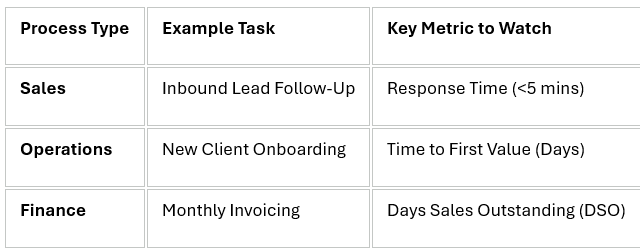
Enforcing Accountability Without Micromanagement
Once an SOP is published, you must transition from a "manager who fixes problems" to a "leader who guards systems."
If a team member makes a mistake, your first question should never be "Why did you do that?" Instead, ask: "What does the SOP say, and did the SOP fail us, or did we fail the SOP?" If the system is broken, fix the system. If the system is good but wasn't followed, you have a training or accountability opportunity.
Visit www.rocketsales.us for a free strategy call!